Berri urges Islamic unity, warns against turning differences into division and strife

Parliament Speaker Nabih Berri stressed that the greatest danger facing the Islamic world today was not the diversity of religious interpretations, but the transformation of differences into division, sectarianism and conflict.
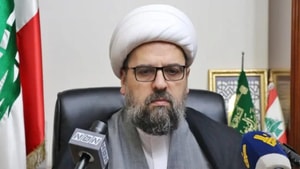
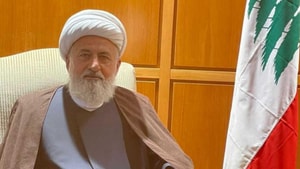
In a message to the International Islamic Unity Conference in Tehran, delivered on his behalf by Tyre and Jabal Amel Mufti Sheikh Hassan Abdullah, Berri said Islamic unity should not seek to eliminate differences.
The unity we need is to disagree without fighting, to be diverse without becoming divided, and to seek the common ground that makes our diversity a source of strength rather than a pretext for division, he said.
Berri warned against allowing religious differences to become sectarian fanaticism, politics to turn into sedition or religion to become an instrument of conflict.
He said scholars and intellectuals had a responsibility to open channels of dialogue rather than deepen divisions, calling for a renewed approach to unity that safeguards human dignity and the sanctity of life, recognizes disagreement as a right and dialogue as a duty, and rejects excommunication and sectarian strife.
Berri also invoked the legacy of Imam Musa Al-Sadr, saying he viewed Islamic denominations as sources of enrichment rather than trenches of conflict and worked to build bridges among communities.
Addressing regional developments, Berri said Palestine and Jerusalem represented a test of the conscience of the Islamic world, while referring to the conflicts in Gaza and Lebanon and the US-Israeli confrontation with Iran.
He also paid tribute to the late Iranian leader Ali Khamenei and expressed support for Mojtaba Khamenei.
Berri called for moving from conferences on unity to building unity, from talking about rapprochement to institutions of rapprochement, from statements of solidarity to projects of cooperation, and from managing disputes to properly managing differences.
He said such an approach should extend to education, media, culture and religious and social institutions, with particular emphasis on raising a new generation that does not inherit hatred or view those of different denominations as enemies.
Islamic unity is not an impossible dream, but it requires courage, Berri said, stressing the need to place common interests above narrow calculations and transform diversity into enrichment and differences into dialogue.