Rasamny launches Tripoli-Abboudieh railway tender from Tripoli port
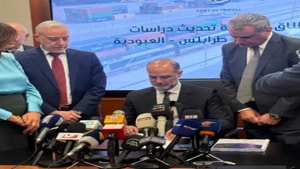
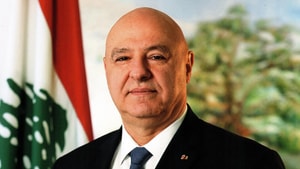
Minister of Public Works and Transport Fayez Rasamny signed tender documents for a long-stalled railway rehabilitation project linking the northern port city of Tripoli to the Lebanese-Syrian border, in a move aimed at repositioning northern Lebanon as a regional logistics and transport hub.
The project covers the modernization and redesign of the railway line extending from Tripoli to Abboudieh on Lebanon’s northern border with Syria.
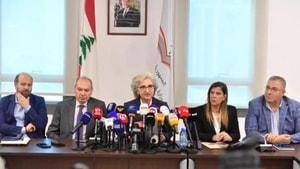
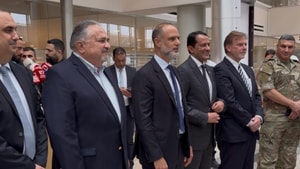
The signing ceremony took place at the Port of Tripoli during an official visit attended by senior transport, economic and port officials, including Tripoli Port Chairman Iskandar Kosti Bandali, Railway and Public Transport Authority chief Ziad Chaya, and Tripoli Chamber of Commerce President Toufic Dabboussi.
Rasamny formally announced the launch of the tender during a press conference, describing the revival of Lebanon’s railway sector as essential to strengthening the national economy and upgrading transport infrastructure.
The importance of northern Lebanon and its strategic position is becoming increasingly evident, Rasamny said, adding that the state’s role was to create commercial opportunities that generate jobs and economic prosperity.
The minister said the initiative stemmed from cooperation between Lebanon’s Railway and Public Transport Authority and the Port of Tripoli administration, following the signing of a cooperation protocol several months ago. Work is now underway to finalize updated technical specifications for the project.
Lebanon’s rail network largely ceased operations during the 1975-1990 civil war. Rasamny said the government was reviving studies and projects dating back to the 1960s and 1970s, noting that the Tripoli-Abboudieh line stopped operating in 1975.
The Minister linked the railway initiative to broader development plans in northern Lebanon, including projects tied to the Rashid Karami International Fair, the Special Economic Zone in Tripoli, and the redevelopment of René Moawad Airport.
Rasamny said the combination of Tripoli Port, the free economic zone and Qlayaat airport made a rail connection to Syria’s hinterland a natural step, adding that Lebanon was seeking integration into wider regional railway networks linking Syria, Turkey, Jordan and Saudi Arabia as part of reconstruction and economic development efforts.
The minister also said Lebanon’s Cabinet and the Higher Council for Privatization had recently approved three major projects, including airport management privatization initiatives, arguing that the state lacked sufficient resources to independently manage public infrastructure at the required level.
The Minister further stressed that future infrastructure projects would be evaluated on the basis of economic feasibility and expanded public-private partnerships after legislative amendments designed to facilitate private sector participation.
The important thing is to begin, he said. Once economic feasibility is proven, investors will come.
Rasamny said the railway feasibility and design study was expected to be completed within six months, adding that the project’s economic rationale was very clear for both freight and passenger transport. He expressed confidence that northern Lebanon and the Akkar region were entering a major phase of economic prosperity.
Addressing security concerns, the minister said stability remained the cornerstone of any investment project, stressing that the Lebanese government and President Joseph Aoun were working to halt the war and facilitate the return of displaced residents.
No economic project can succeed without security and stability, he said.
Rasamny also added that Lebanon’s railway authority owns nearly 10 million square meters of land and is continuing efforts, in coordination with the judiciary and security agencies, to remove encroachments along the railway corridor between Tripoli and Abboudieh.
During the visit, the minister toured the port’s cargo scanner facility and reviewed inspection and customs monitoring procedures for containers and goods before inspecting port terminals and infrastructure installations.
For his part, Dabboussi praised what he described as the government’s developmental and economic approach, saying the Port of Tripoli represented a renaissance not only for Tripoli, but for all of Lebanon.
Bandali said the port stood to be the primary beneficiary of the railway project, citing its expected impact on cargo volumes and the port’s competitiveness in attracting international shipping lines and operators.