100,000 Children at Risk of Missing School Without Urgent Action in Lebanon
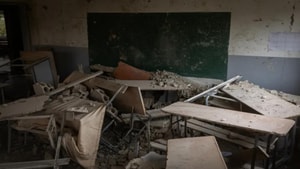
At least 100,000 children in Lebanon could be left without a classroom when the next academic year begins, unless urgent action is taken before September to repair and restore schools damaged by the recent conflict.
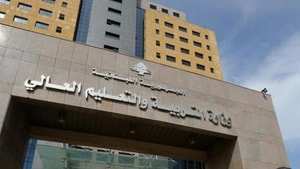
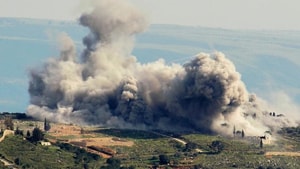
A comprehensive nationwide assessment conducted by the Ministry of Education and Higher Education in June has revealed the devastating impact caused by the recent conflict to Lebanon's education system. The assessment found that 340 public, private and Technical and Vocational Education and Training (TVET) schools have been damaged, including 17 schools that have been completely destroyed.
The assessment was developed with technical support from UNICEF through the Transition and Resilience Education Fund (TREF), supported by the European Union, Germany, France and Switzerland.
The damage spans many of the governorates most affected by the conflict, including Nabatiyeh, South Lebanon, Bekaa, Baalbek-Hermel, Beirut and Mount Lebanon. While some schools sustained minor damage, many require extensive rehabilitation or complete reconstruction before they can safely welcome students and teachers back.
Schools are far more than buildings, said UNICEF Representative in Lebanon Marcoluigi Corsi. They are places where children learn, feel safe, and begin to recover from crisis. This assessment provides the first comprehensive picture of the scale of damage to Lebanon's education system. With the new school year approaching, urgent investment is needed to rehabilitate damaged schools and ensure children can return to learning without delay.”
The findings come after years of repeated disruption to children's education in Lebanon, driven by overlapping crises and conflict. For many children, another prolonged interruption to learning would carry lasting consequences for their education, wellbeing, mental health, and future opportunities. The lack of access to education also increases their vulnerability to protection risks, such as early marriage and child labor.
Every day a child remains out of school, the risk of learning loss and dropping out increases, said Corsi. Education cannot wait for recovery to begin; it is an essential part of recovery. Rehabilitating schools goes beyond repairing walls and classrooms, it restores hope and provides protection, giving every child the chance to learn and build their future.
UNICEF is working alongside the Ministry of Education and Higher Education, donors and partners to support school rehabilitation, learning continuity and education recovery across Lebanon. While TREF donors have been significantly supporting the education sector for years, the scale of destruction requires significantly increased investment, to restore safe learning environments before the start of the next academic year.
Every child has the right to learn in a safe, protective and inclusive environment. Investing in education recovery today is an investment in Lebanon's children, its communities and its future.