Jaber pushes for expanded reconstruction funding at World Bank meetings
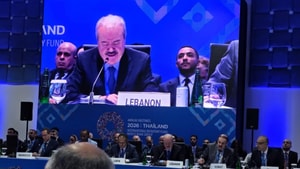
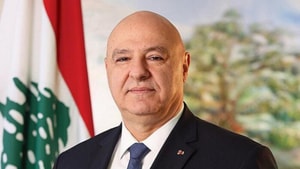
Finance Minister Yassine Jaber continued leading the Lebanese delegation’s meetings on the fifth day of the International Monetary Fund and World Bank Group annual meetings in Bangkok, with discussions focusing on financial and banking reforms, reconstruction funding and Lebanon’s role in regional connectivity projects.
Jaber reaffirmed the government’s commitment to advancing reforms despite the repercussions of regional conflict, economic fragility and mounting humanitarian challenges, calling for energy, transport and trade connectivity to become priorities in the World Bank’s regional programs.
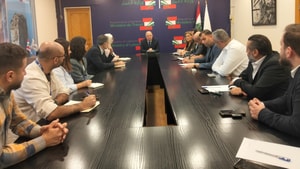
Addressing a meeting of Arab governors with World Bank Group President Ajay Banga, Jaber stressed Lebanon’s commitment to resolving its banking crisis in accordance with international standards while maintaining strict fiscal discipline.
He outlined progress on the government’s reform agenda, noting that amendments to the bank restructuring law were expected to be finalized within days, while draft financial gap legislation was before Parliament. He also highlighted the submission of the state budget within the constitutional deadline, plans to restructure and corporatize public institutions, digitization of Finance Ministry services, electronic payment systems and efforts to remove Lebanon from the Financial Action Task Force (FATF) grey list.
Jaber welcomed World Bank support, particularly the reconstruction fund launched with an initial $250 million loan.
He urged the Bank to prioritize regional connectivity projects, emphasizing the potential of Lebanese ports to serve as gateways to regional markets and strengthen Lebanon’s role in transport and trade.
The Arab governors’ joint statement identified four priorities: recovery and reconstruction, regional connectivity, mobilizing private capital through guarantees and local-currency financing, and strengthening Arab representation in senior positions within the World Bank Group.
Banga, for his part, said Lebanon, Syria and Iraq faced an opportunity not seen in many years, reaffirming the Bank’s commitment to supporting regional integration and private-sector development. He encouraged governments to concentrate on a limited number of clearly defined priorities capable of delivering tangible results.
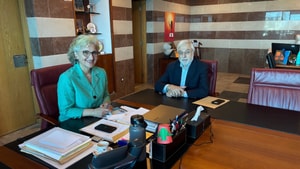
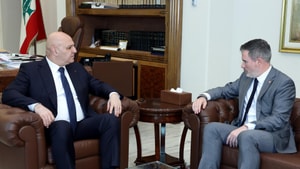
In a separate meeting with British Minister of State for International Development Kirsty McNeill, Jaber discussed international assistance for Lebanon’s reconstruction efforts, including donor contributions aimed at increasing the reconstruction fund from $250 million to a targeted $1 billion.
Discussions also addressed public-sector restructuring as a cornerstone of economic recovery, including plans to corporatize the electricity, airport and telecommunications sectors and subject them to audits by international firms to strengthen transparency, governance and fiscal sustainability.
The two sides explored opportunities to expand British-Lebanese cooperation, particularly technical assistance for digital transformation.
McNeill praised the reform efforts led by Jaber and expressed Britain’s readiness to support Lebanon through bilateral cooperation and multilateral institutions. Jaber invited her to visit Lebanon.
Economy Minister Amer Bisat presented three initiatives aimed at strengthening Lebanon’s investment environment: a program connecting Lebanese companies with institutional investors, a World Bank-supported trust fund for small and medium-sized enterprises, and technical assistance to develop underutilized public assets.
The two sides agreed that Lebanon would submit a concept note outlining the three proposals.
The Lebanese delegation participating in the meetings included Bisat, Director General of Public Finance George Maarawi, and Finance Minister advisers Zeina Kassem and Claudine Karki.