Morcos discusses copyright protection, UNICEF cooperation and media law reforms
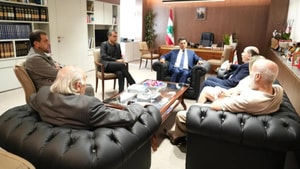
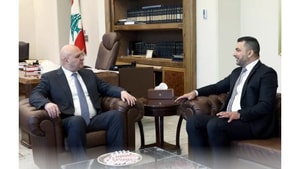
Information Minister Paul Morcos began a series of meetings by receiving composer and producer Oussama Rahbani, president of the Lebanese Authors and Composers Council (CACL), accompanied by a council delegation.
Rahbani said discussions focused on revitalizing cooperation to secure authors’ and composers’ rights, amid what he described as a decline in royalty collection in recent years. He stressed that copyright payments are a right, not a tax, and said Morcos could help strengthen compliance among television and radio stations.
Rahbani said the problem also affects restaurants, hotels, concerts and other venues, noting that compliance at concerts has improved through SACEM France’s work in Lebanon, while adherence among broadcasters remains weak. He added that Lebanon’s Copyright Law No. 75/99 protects authors and composers and regulates collective rights-management organizations.
Morcos later received Tunisian-American director and producer Imad Dabbour, accompanied by Lighthouse Arabia Director General Paul Naoum, who briefed him on preparations to distribute and screen The Chosen in Lebanese cinemas in March and April. Naoum invited Morcos to sponsor the film’s premiere and visit Light FM for a special interview.
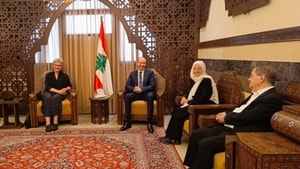
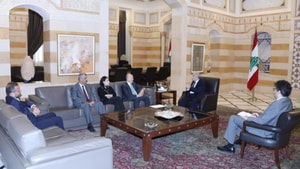
The minister also met a UNICEF delegation comprising Blanche Baz and Christopher Polerak, in the presence of Télé Liban Chairwoman Dr. Alissar Naddaf.
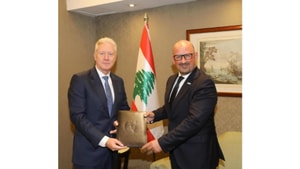
Morcos separately received a Beirut Lions Club delegation led by Dr. Ghassan Adhami, which presented him with a commemorative plaque and the club’s flag. The delegation praised his work on human rights and freedom of expression and welcomed his efforts to develop the ministry’s role and rename it the Ministry of Communication.
He also met Lebanese League for Women in Business President Abeer Shbaro, Dr. Wael Kashli and Executive Director Dalia Lakkis. The delegation proposed amendments to address gender gaps in the new media law, including linking media licenses to enforcement of anti-sexual harassment legislation, introducing at least a 30% women’s quota on the National Media Authority, protecting journalists from digital violence and blackmail, prohibiting gender discrimination in pay and promotion, and expanding protections for freelance and digital-platform journalists.