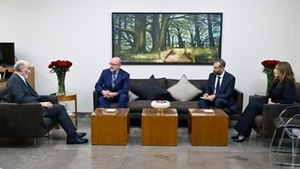
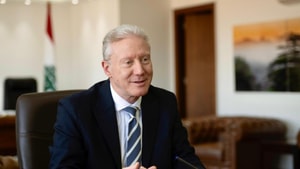
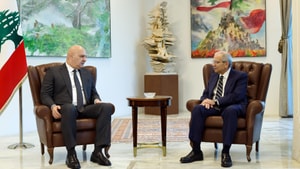
Jaber, representing Aoun, calls for sovereignty, reform, and reconstruction
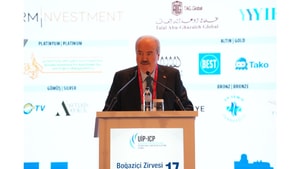
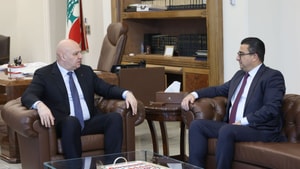
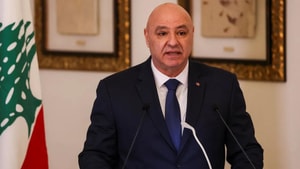
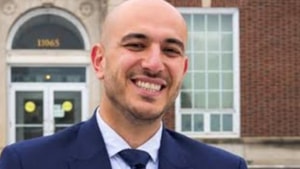
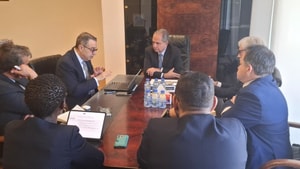
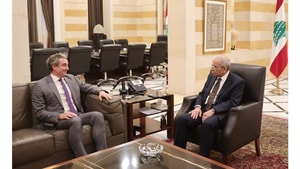
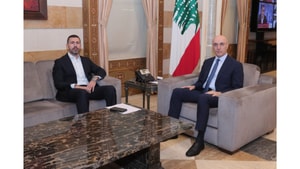
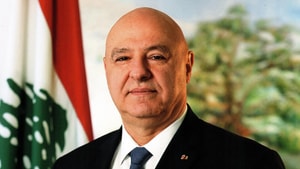
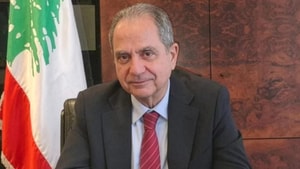
Finance Minister Yassine Jaber, representing President Joseph Aoun at the 17th Bosphorus Summit in Istanbul, delivered a presidential message emphasizing that lasting stability in Lebanon required full state sovereignty, institutional reform and sustainable economic recovery.
Aoun reaffirmed Lebanon’s commitment to strengthening its institutions and army, implementing UN Resolution 1701 and securing Israel’s complete withdrawal from Lebanese territory.
Reflecting on Lebanon’s crises since 2019, he stressed that resilience alone could not substitute for effective governance.
The message outlined reforms targeting banking restructuring, depositors’ rights, tax and customs modernization, and digital public services to strengthen transparency and combat corruption.
Aoun emphasized that reconstruction must generate employment, encourage investment and restore citizens’ confidence in their future.
He also praised Türkiye’s support for Lebanon and called for expanded cooperation in trade, infrastructure, investment and reconstruction.
The following is the full speech:
Excellencies,
Mr. Cengiz Özgencil, Founder and CEO of the International Cooperation Platform,
Madam Rona Yırcalı, Honorary Board President,
Distinguished guests, ladies and gentlemen,
It is an honor to convey the warm greetings of His Excellency President Joseph Aoun and his appreciation to Türkiye and the organizers of the Bosphorus Summit.
We meet at a time when crises no longer come one at a time, and when the ties between nations are under real strain.
For most people, the whole debate on stability comes down to something simple: will tomorrow be better than today?
In Lebanon, people have had good reason to doubt it.
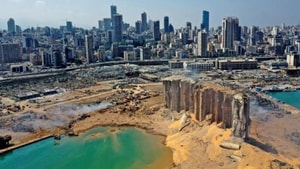
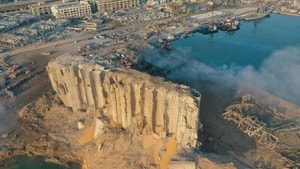
Since 2019, our people have lived through a financial collapse, the explosion at the port of Beirut, war, and displacement. Families lost their savings, and many of our young people left. In the South, villages are still under occupation, and many areas are still waiting to be rebuilt.
The Lebanese have shown remarkable resilience, and they are right to be proud of it. But resilience cannot replace a state that works. Our people should not have to be extraordinary simply to live ordinary lives.
Our aim, then, is not only to recover from the last crisis, but to build a state strong enough to withstand the next one.
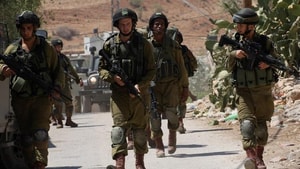
The first step is sovereignty. Lasting stability requires a state able to exercise its legitimate authority throughout its territory, protect its citizens, and uphold the rule of law. Lebanon is committed to strengthening its institutions and its Armed Forces, implementing Resolution 1701 and the other relevant international resolutions, and securing the full withdrawal of Israeli forces from Lebanese territory.
But security on its own will not hold. We have said it before, and we will keep saying it now: stability without development is fragile, and no country holds together when its people see no future.
The second step is restoring trust, and that cannot be done with words. It takes decisions, accountability, and results people can see. That is why we are restructuring the banking sector, working to return depositors’ rights, and modernizing our tax and customs administrations. We are also moving public services online, so that citizens and businesses can register, file their taxes, pay their dues, and clear their goods without queues, piles of paperwork, or the need to know someone. That means electronic invoicing, digital customs clearance, online land registry services, and electronic payments that leave a clear record of every transaction. Every service that moves online is one less opening for corruption, and one more reason for people to trust the state. We are grateful for the support of our partners. But we are doing this because the Lebanese deserve it, not because anyone asked us to.
The third step is turning recovery into opportunity. Roads, homes, and infrastructure must be rebuilt, of course. But we will judge reconstruction by whether a young graduate decides to stay, whether an entrepreneur decides to invest, and whether a family can plan a year ahead. Much of that comes down to jobs. When people can earn a decent living at home, they stay, and stability follows.
The Bosphorus is a good place to remember that geography alone does not connect people. Bridges are built because someone chooses to build them, and they last because others choose to cross them.
Lebanon values its friendship with Türkiye, which stood by us in difficult times and has contributed to peacekeeping in South Lebanon. We want to do more together in trade, investment, infrastructure, and reconstruction, for the good of both our peoples and of the region.
Excellencies,
We cannot go back to the world as it was. Our task is to build institutions and partnerships that work in the world as it is becoming.
Lebanon does not claim to have all the answers, and we know the road ahead is long. But we are determined to stay the course.
Stability, in the end, is not measured in reports. It is measured when a parent stops worrying about tomorrow, and when a citizen trusts the state again.
That is the Lebanon we are working to build.
Thank you.