Israel, Lebanon Sign Initial Agreement After US-Mediated Talks
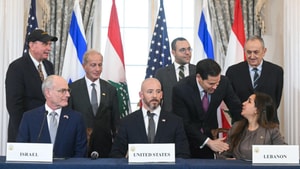
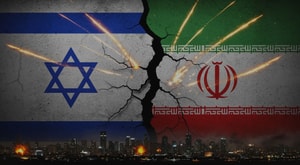
Israel and Lebanon signed a framework agreement in Washington on Friday following several days of talks to secure an end to fighting between Israel and Iran-backed Hezbollah militants, though both sides framed the deal as an initial step.
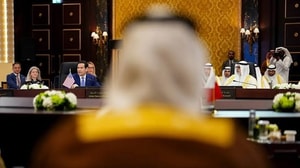
Lebanese Ambassador Nada Moawad and her Israeli counterpart Yechiel Leiter signed the trilateral document with the U.S. at the State Department in Washington, providing few details.
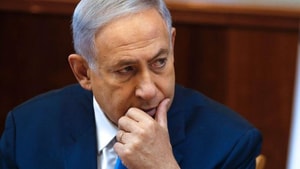
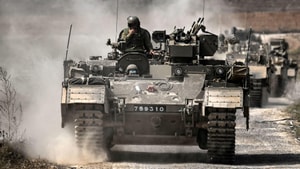
Israeli Prime Minister Benjamin Netanyahu said the agreement allows Israeli forces to continue to occupy southern Lebanon if Hezbollah does not disarm.
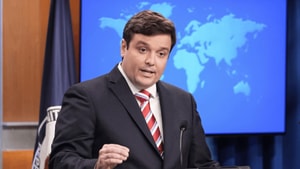
Today we've taken the first step in what will be a difficult journey, without a doubt, but an important and an essential and a necessary one, U.S. Secretary of State Marco Rubio said before the agreement was inked.
In a later statement he said that the U.S. would facilitate the implementation of the deal through a trilateral Military Coordination Group for Lebanon and that Washington would commit significant resources, including an immediate $100 million in humanitarian assistance in coordination with the U.N.
Rubio added that the U.S. reaffirmed its intent to improve the capabilities of the Lebanese Armed Forces to more effectively establish sovereignty throughout Lebanese territory with more than $30 million in funds under existing U.S. authorities and appropriations.
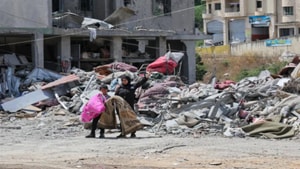
The conflict between Israel and Hezbollah broke out when the armed group fired at Israel on March 2, days after the U.S. and Israel attacked Iran. The Hezbollah attacks triggered Israeli air and ground attacks that have killed more than 4,000 people in Lebanon and displaced more than a million.
Lebanon's Moawad also called it a first step on the road to restoring Lebanese sovereignty.
Iran is out, Hezbollah is out, and the road to peace between Israel and Lebanon is in, Leiter said.
'PILOT ZONES'
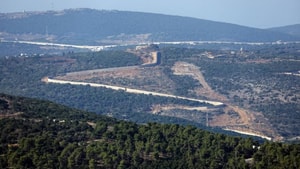
Netanyahu said in a statement that the deal would also allow the Lebanese army to begin organizing to take control of territory, starting with what he described as two pilot zones from which Israeli troops would withdraw from land they occupied during the war.
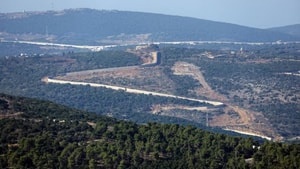
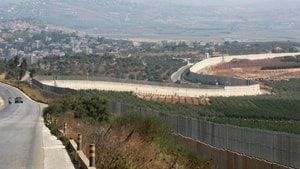
Israel describes that territory as a security zone or buffer zone where its troops can thwart Hezbollah attacks on northern Israel.
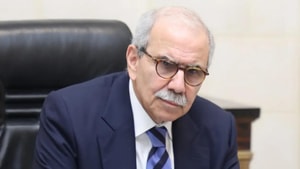
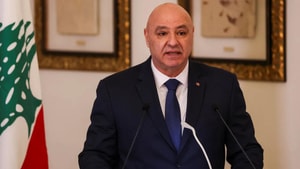
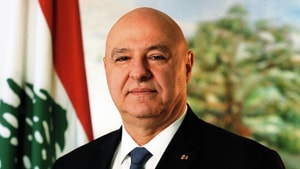
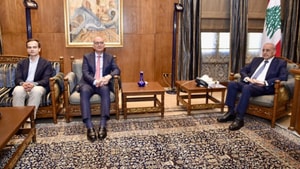
Lebanese President Joseph Aoun said the agreement should allow Lebanese to return to fully liberated land and rebuilt homes with no partner in its sovereignty.
Israel's death toll from this round of hostilities with Hezbollah includes at least 32 soldiers and four Israeli civilians. Hezbollah does not release figures on its war dead. Reuters reported on May 4 that several thousand Hezbollah fighters had been killed in the war.
A State Department official told Reuters on Thursday that Israel had agreed to pull back from some of the territory it has occupied, something Israeli and Lebanese officials denied.
Before the talks resumed this week, Israel and Hezbollah agreed to halt fire even as Israel kept troops in southern Lebanon.
Violence has persisted since the ceasefire, with Israel saying on Friday its troops had struck and killed what the military described as seven Hezbollah members who were operating near the territory it is occupying. Reuters could not confirm this.
To the degree that the Lebanese army performs in dismantling and disarming Hezbollah, we will proceed with additional pilot zones and the ultimate determination of an internationally recognized, secure, and agreed upon border, Leiter told reporters after the signing.
Hezbollah lawmaker Hassan Fadlallah said Lebanese authorities would not be able to enforce the agreement unless, with U.S. support, they go to civil war, pro-Iranian broadcaster Al Mayadeen reported.
Hezbollah would confront any measure taken by Lebanese authorities and would hold on to its weapons even more, adding that the group's opposition was serious and would not allow authorities to implement their commitments on the ground, Fadlallah said.