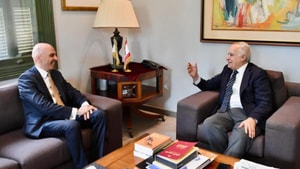
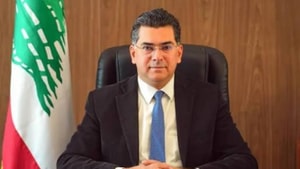
Shehadeh represents President Aoun at regional cybersecurity conference

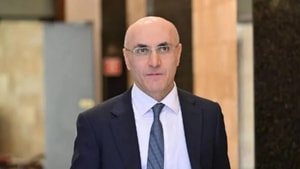
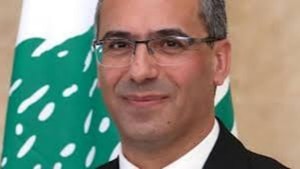
Minister of the Displaced and Minister of State for Technology and Artificial Intelligence Dr. Kamal Shehadeh represented President Joseph Aoun at the sixth Regional Conference on Cybersecurity in the Age of Artificial Intelligence, held in Beirut.
The conference was attended by MP Fadi Alameh, representing Parliament Speaker Nabih Berri, Minister Fadi Makki, representing Prime Minister Nawaf Salam, as well as representatives of the Arab League and cybersecurity and technology experts.
Delivering an address on behalf of President Aoun, Shehadeh stressed that artificial intelligence was reshaping cybersecurity by offering new opportunities to protect institutions and anticipate threats, while simultaneously equipping malicious actors with increasingly sophisticated tools to launch complex and rapid attacks.
He emphasized the importance of securing AI systems themselves, strengthening human oversight and accountability, and preparing for challenges posed by quantum computing, particularly in protecting digital communications, financial transactions and sensitive government information.
Shehadeh described cybersecurity as a fundamental pillar of national security and digital sovereignty, warning that serious breaches could disrupt essential services, undermine institutional continuity and erode public confidence in the state.
He highlighted the importance of cooperation among government institutions, the private sector, universities and international partners.
The minister noted that Lebanon possesses specialized expertise in technology and cybersecurity and announced that work was nearing completion on a draft cybersecurity law aimed at establishing a competent national authority with the necessary powers to oversee the sector.
Shehadeh outlined five priorities for strengthening Lebanon’s cybersecurity preparedness: integrating security into digital transformation from the design stage, enhancing national cyber resilience, developing specialized expertise, strengthening governance and accountability, and expanding regional cooperation and information-sharing.
He concluded by stressing that innovation and security must advance together, with security, responsibility and trust serving as essential foundations for sustainable technological progress.