Jaber highlights role of digital transformation in rebuilding state institutions

Finance Minister Yassine Jaber stressed the importance of digital transformation and artificial intelligence in strengthening state institutions, improving public financial management and enhancing government services, as he continued his meetings in Cairo during the Cairo ICT 2026 exhibition and conference.
Jaber, accompanied by a Finance Ministry delegation, held discussions with his Egyptian counterpart, Ahmed Kouchouk, as well as senior representatives of major technology and financial technology companies, exploring opportunities to modernize the ministry’s digital infrastructure, streamline administrative procedures and improve integration between financial systems.
The talks focused on leveraging digital solutions to enhance operational efficiency, improve access to accurate financial information and strengthen the monitoring of public revenues, expenditures and treasury management.
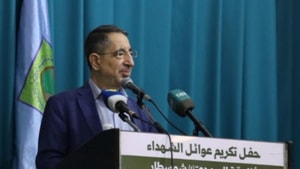
Speaking at a dinner hosted by Egypt’s Minister of Communications in honor of participating delegations, Jaber said Lebanon’s experience with successive crises had demonstrated that a state’s digital infrastructure was not merely a tool for facilitating administrative work, but a fundamental component of its ability to maintain continuity.
He stressed that digital transformation had become an essential part of rebuilding state institutions, warning that disruptions to critical systems and limited access to information directly affect public financial management, government services and timely decision-making.
Jaber also highlighted the growing role of artificial intelligence in financial management, noting that finance ministries must not only integrate AI into their operations but also prepare their economies to benefit from it through investment in infrastructure, skills development and support for small businesses.
He pointed to the potential of integrating budget, treasury, government accounting, revenue, customs and public debt systems, alongside data analytics and machine learning, to improve financial forecasting, cash-flow management, risk monitoring and the assessment of economic policies.
However, he emphasized that reliable data, common standards and accountable institutions remain essential, stressing that while artificial intelligence can support financial decisions, ultimate responsibility must remain with the human decision-maker.
Jaber further called for citizen-focused digital services that reduce administrative burdens, unnecessary visits to government offices, repetitive procedures and delays. He argued that governments should go beyond simply digitizing existing procedures and reconsider why certain administrative requirements remain in place.
He also called for stronger Arab cooperation in data standards, skills development and the exchange of expertise, urging technology companies to move beyond supplying digital tools and establish partnerships with governments to identify challenges, develop sustainable solutions and strengthen institutional capabilities.
Jaber reaffirmed Lebanon’s readiness to expand cooperation with Egypt and other Arab countries and benefit from their successful experiences in modernizing public institutions, emphasizing the need to translate technological advances into tangible economic and institutional gains.