UN Special Coordinator Briefs Security Council on Implementation of Resolution 1701 in Lebanon
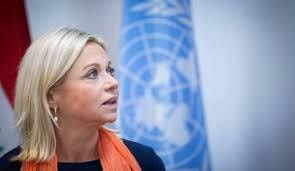
United Nations Special Coordinator for Lebanon, Jeanine Hennis-Plasschaert, briefed the Security Council on the implementation of Security Council Resolution 1701, saying:
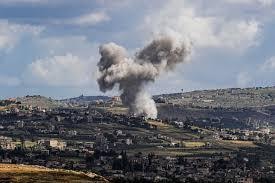
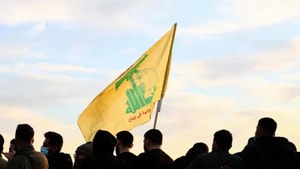
Initial hopes that Lebanon would be spared from the fires burning across the region were dashed when Hezbollah launched an attack against Israel in the early hours of 2 March. In doing so, it spread the embers that have now engulfed Lebanon in flames, stated United Nations Special Coordinator for Lebanon Jeanine Hennis-Plasschaert, while describing the impact of hostilities in Lebanon, including the mounting civilian toll propelled by expansive Israeli military actions.
Briefing the Security Council on the implementation of United Nations Security Council resolution 1701 (2006) alongside United Nations Under-Secretary-General for Peace Operations Jean-Pierre Lacroix, the Special Coordinator warned that betting on a regional settlement to solve Lebanon's problems would be a grave mistake. While diplomatic efforts continue unabated, Lebanon must urgently focus on what can be done at the domestic level, including the development of a comprehensive roadmap to address the question of Hezbollah's future.
Such a roadmap, she argued, must not only encompass the group's weapons, but also its financial networks and social infrastructure and should involve all branches and arms of the Lebanese State. The Special Coordinator also urged swift and decisive action on long-delayed objectives, including a national security strategy, some form of cross-party unity dialogue, enhanced socio-economic prospects for marginalized communities and planning for the day after vis-à-vis Hezbollah fighters.
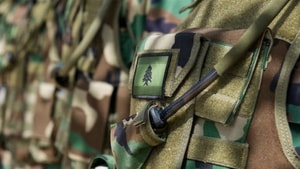
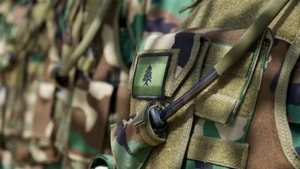
Equally important, is, of course, a strengthened Lebanese Army, Hennis-Plasschaert noted. The harsh reality is that, despite their indispensability to the State's assertion of a monopoly on arms, the Lebanese Armed Forces continue to face a colossal mismatch between the resources at hand and the tasks ahead. This requires a significant scale-up in international support, as well as Lebanon's own fiscal prioritization, she added. A credible, capable Lebanese army must be a shared priority.
With humanitarian, recovery and reconstruction needs skyrocketing, the Special Coordinator further asserted that international funding for immediate assistance and support is not only a humanitarian imperative, but also a means to prevent non-State actors from, again, supplanting the State on the ground.
In closing, Hennis-Plasschaert described the situation as profoundly challenging, volatile and dangerous. Ongoing military actions will not bring about lasting solutions, she stated. Welcoming Lebanon's openness to direct talks with Israel, the Special Coordinator underlined that across all sects, confessions and political affiliations, there is a resounding readiness to abandon armed resistance for governance, a great desire to live in a stable country and region, as well as an enormous appetite to build a State that unites, rather than to maintain the weapons that divide.