Aoun Pushes for Arab Economic Bloc, Starting with Agricultural Cooperation
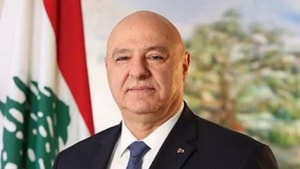
President Joseph Aoun stressed that agriculture constitutes a cornerstone of Lebanon’s economy, revealing that the sector suffered an estimated $620 million in losses as a result of the war, particularly in border areas.
Aoun emphasized that revitalizing agriculture was essential not only to economic recovery but also to enabling residents of southern Lebanon to remain on their land.
The president also renewed his call for greater economic integration among Arab countries, modeled on the European Union, beginning with the facilitation of trade in goods and services.
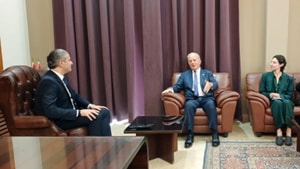
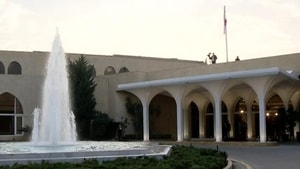
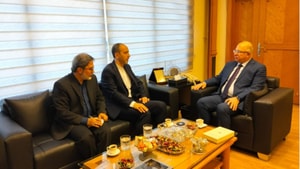
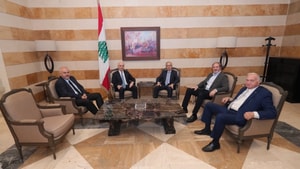
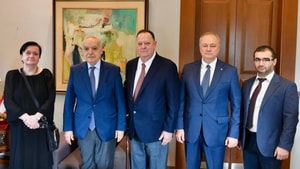
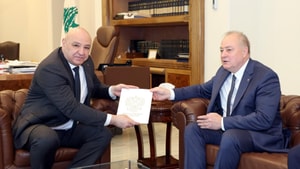
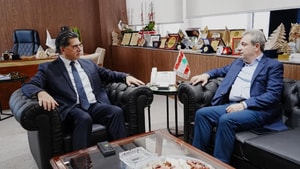
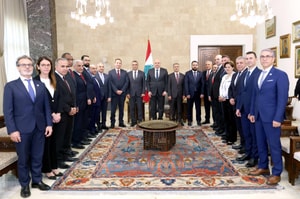
His remarks came during a meeting at Baabda Palace with a delegation of Arab agriculture ministers and representatives of the United Nations Food and Agriculture Organization (FAO), in the presence of Agriculture Minister Nizar Hani.
Opening the meeting, Hani thanked President Aoun for his continued support for the agricultural sector since the beginning of his term, recalling the ministry’s slogan, Agriculture is the Pulse of the Land, to which the president had added the words and Life.
Hani explained that the meeting aimed to activate the quadrilateral agricultural agreement signed in Syria in 2023 between Lebanon, Syria, Jordan and Iraq, which had remained largely unimplemented.
He announced that two working sessions would be held to establish an implementation mechanism, strengthen agricultural research, facilitate the exchange of expertise, encourage joint investments and streamline the movement of agricultural products among the four countries.
Hani also praised FAO’s role in supporting Lebanon’s agricultural sector, expressing hope that regional cooperation among neighboring countries could provide a model for agricultural integration that might eventually extend to North Africa and other regions.
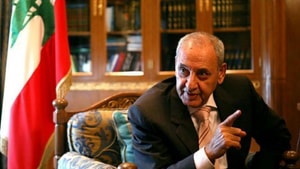
Welcoming the delegation, President Aoun praised efforts to strengthen regional agricultural cooperation and improve food security.
I am a son of the land, and I take pride in the fact that my parents worked in agriculture, which forms the backbone of the economy, Aoun said.
He welcomed the gathering as an opportunity to identify practical measures benefiting farmers and strengthening food security.
The president commended Minister Hani for developing Lebanon’s ten-year National Agricultural Strategy for 2026–2035, which outlines priorities for agricultural development and investment.
He highlighted the estimated $620 million in losses suffered by the sector due to the war, particularly in border regions, stressing that agricultural recovery was vital to preserving the connection between southern residents and their land.
Aoun reiterated that he had been among the first, since assuming office, to advocate economic integration among Arab countries along the lines of the European Union.
He said the countries of the Mashreq could establish a regional economic bloc, beginning with agricultural cooperation and eventually expanding into other sectors.
The president also called for activating the joint technical committee established under the quadrilateral agreement.
Addressing FAO representatives, he requested technical assistance in preparing an implementation plan with a clear timetable, particularly for piloting the electronic exchange of phytosanitary certificates to facilitate cross-border procedures and reduce delays caused by paperwork.
Aoun thanked the visiting ministers for coming to Lebanon, describing their presence as a demonstration of confidence in the country.
He reaffirmed that agricultural integration among Lebanon, Syria, Jordan and Iraq was essential to strengthening their economies and harnessing their considerable agricultural potential.
Arab Agriculture Ministers Welcome Regional Integration Initiative
Jordanian Agriculture Minister Saeb Khreisat welcomed President Aoun’s proposal for economic integration, describing agricultural cooperation as a foundation for broader regional partnerships.
He emphasized that Lebanon’s openness could contribute to strengthening food security and expressed confidence in the continued development of relations between Jordan and Lebanon.
Iraqi Agriculture Minister Abdul Rahim Al-Shammari conveyed greetings from the Iraqi government and people to President Aoun and the Lebanese people.
Agriculture has brought our countries together where other sectors have not succeeded, he said, emphasizing the importance of agricultural self-sufficiency and cooperation among neighboring countries when self-sufficiency proves unattainable.
Syrian Agriculture Minister Bassel Al-Sweidan underscored the importance of sustained cooperation between Syria and Lebanon in addressing agricultural challenges.
He expressed his country’s interest in benefiting from Lebanese expertise, particularly in agricultural marketing, noting Syria’s extensive agricultural land and the potential for closer economic integration.
FAO Assistant Director-General and Regional Representative for the Near East and North Africa AbdulHakim Elwaer described President Aoun’s agricultural integration initiative as distinctive at the international level.
He expressed hope that its success would establish a pioneering model that could be replicated in other regions.
Elwaer highlighted opportunities to strengthen technical cooperation and improve the flow of agricultural products by coordinating production and export seasons.
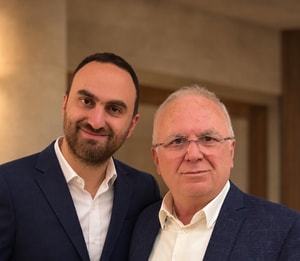
For his part, Professor Ibrahim El Dukheri, Director General of the Arab Organization for Agricultural Development, emphasized the importance of integrating agricultural activities and investments to overcome existing obstacles.
He reaffirmed the readiness of the League of Arab States to support efforts toward agricultural integration and promote the initiative as a model for other countries.
Speaking to reporters following the meeting, Minister Hani said the gathering marked the first formal meeting of all parties involved in the quadrilateral agricultural agreement since its signing in 2023.
He explained that the talks were intended to establish a clear action plan covering scientific research, expertise-sharing, regional agricultural integration, joint investments and the facilitation of agricultural trade.
Hani stressed the need to simplify laboratory testing, inspections and administrative procedures at border crossings to accelerate the movement of agricultural products while maintaining quality standards.
He also invited the agricultural community to attend the Agri Lebanon exhibition, describing it as an opportunity for exchanging knowledge and strengthening agricultural capabilities.
Responding to a question, Hani reiterated that the primary objective was to facilitate cross-border trade and remove administrative obstacles, with FAO providing technical expertise in regional cooperation.
He expressed hope that the quadrilateral agreement would serve as a successful model for broader economic integration across the Mashreq.